
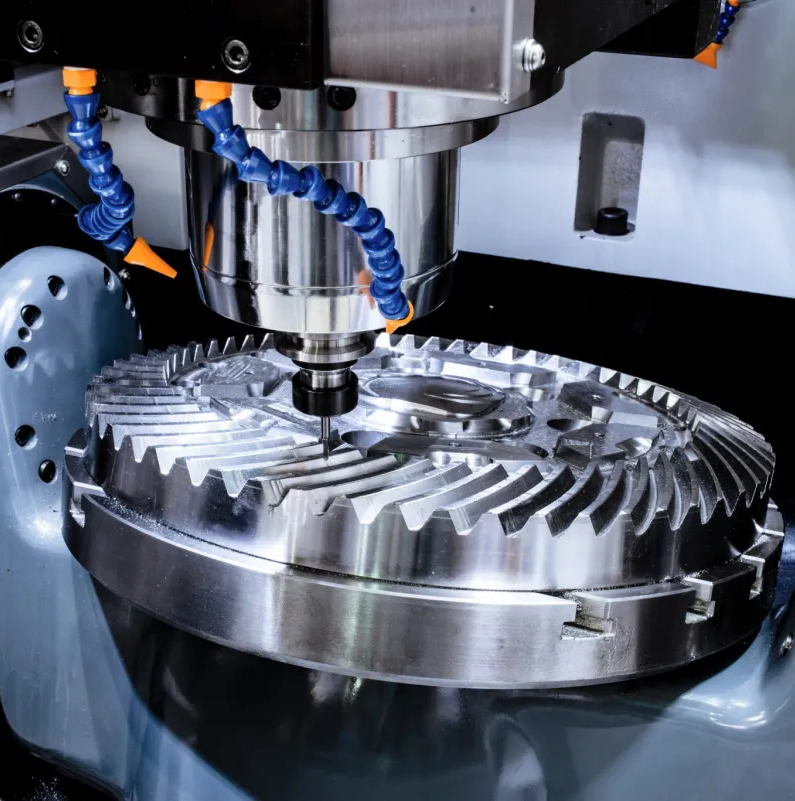
Computer Numerical Control (CNC) machines have become the backbone of modern manufacturing. By combining precision engineering with digital automation, they have reshaped how industries design, prototype, and mass-produce components. From aerospace and automotive to medical devices and consumer products, CNC machines offer efficiency and consistency at a level traditional manual machining could never achieve.
In this article, we’ll explore what CNC machines are, how they work, and why they are essential in today’s industrial world.
What Are CNC Machines?
CNC stands for Computer Numerical Control. These machines use computer programs to control the movement of cutting tools, drills, and lathes. Instead of an operator manually turning wheels or levers, the entire process is automated using coded instructions (G-code).
With CNC, manufacturers can produce parts with extreme precision — often accurate to fractions of a millimeter. This accuracy ensures that every piece is consistent, no matter how complex the design.
How Do CNC Machines Work?
At the heart of CNC machining is the digital design-to-production process. Here’s a simplified breakdown:
- Design Stage – Engineers create a 2D drawing or 3D model using Computer-Aided Design (CAD) software.
- Programming – The design is converted into G-code, which tells the machine how to move.
- Setup – The raw material (metal, plastic, or composite) is secured inside the CNC machine.
- Machining – The CNC machine follows the program, cutting, drilling, or shaping the material with precision.
- Finishing – The part may undergo polishing, deburring, or heat treatment to meet final requirements.
This workflow makes CNC machining highly repeatable, scalable, and reliable.
Types of CNC Machines
Different CNC machines specialize in different tasks. Some of the most common include:
1. CNC Milling Machines
These machines use rotating cutting tools to remove material from a solid block. They can create complex shapes, slots, and holes with exceptional accuracy.
2. CNC Lathes
CNC lathes rotate the workpiece against a stationary cutting tool. They are ideal for cylindrical parts such as shafts, screws, and pipes.
3. CNC Plasma Cutters
Plasma cutters use a high-temperature plasma torch to cut through conductive materials like steel and aluminum. They’re widely used in metal fabrication.
4. CNC Laser Cutters
Laser cutters use a focused beam of light to cut or engrave materials. They are often used in electronics, signage, and jewelry.
5. CNC Electrical Discharge Machines (EDM)
These machines remove material by using controlled electrical sparks. EDM is especially useful for hard metals and intricate molds.
Benefits of CNC Machines
CNC machines have become a must-have for industries worldwide because of their many advantages:
- Precision – Achieve tolerance levels as fine as 0.001 mm.
- Consistency – Every product matches the design specifications exactly.
- Efficiency – Faster production with less human error.
- Flexibility – Easily switch between designs by uploading a new program.
- Cost-Effectiveness – Reduced waste and lower labor costs in the long run.
CNC Machines vs. Traditional Machining
While traditional machining relies heavily on skilled operators, CNC shifts the focus to digital control. Instead of manual adjustments, engineers can automate complex processes with minimal supervision.
- Traditional Machining: Slower, labor-intensive, more prone to errors.
- CNC Machining: Faster, scalable, and capable of producing intricate designs that are impossible manually.
This difference explains why CNC has become the industry standard for high-quality, large-scale production.
Applications of CNC Machines
CNC technology has applications across almost every industry:
- Automotive – Engine components, gearboxes, and custom bodywork.
- Aerospace – Lightweight, high-strength parts for aircraft and spacecraft.
- Medical Devices – Precision implants, surgical tools, and prosthetics.
- Electronics – Circuit boards, housings, and connectors.
- Consumer Products – Furniture, watches, sports equipment, and more.
Simply put, if you look around your home or office, chances are several items were made with CNC machining.
The Future of CNC Technology
CNC machines continue to evolve alongside automation, AI, and robotics. Modern factories integrate CNC systems into “smart factories,” where data analytics and real-time monitoring improve productivity.
Some exciting developments include:
- Hybrid machines that combine CNC with 3D printing.
- AI-driven optimization that reduces tool wear and material waste.
- Cloud-based CNC programming that enables remote collaboration and control.
As technology advances, CNC machines will only become more versatile and central to global manufacturing.
As technology advances, CNC machines will only become more versatile and central to global manufacturing.
Leave a Reply